TRANSLATE WEBSITE IN YOUR OWN LANGUAGE
Agnihotra and Its Importance in Your Life
Introduction and Historical Background
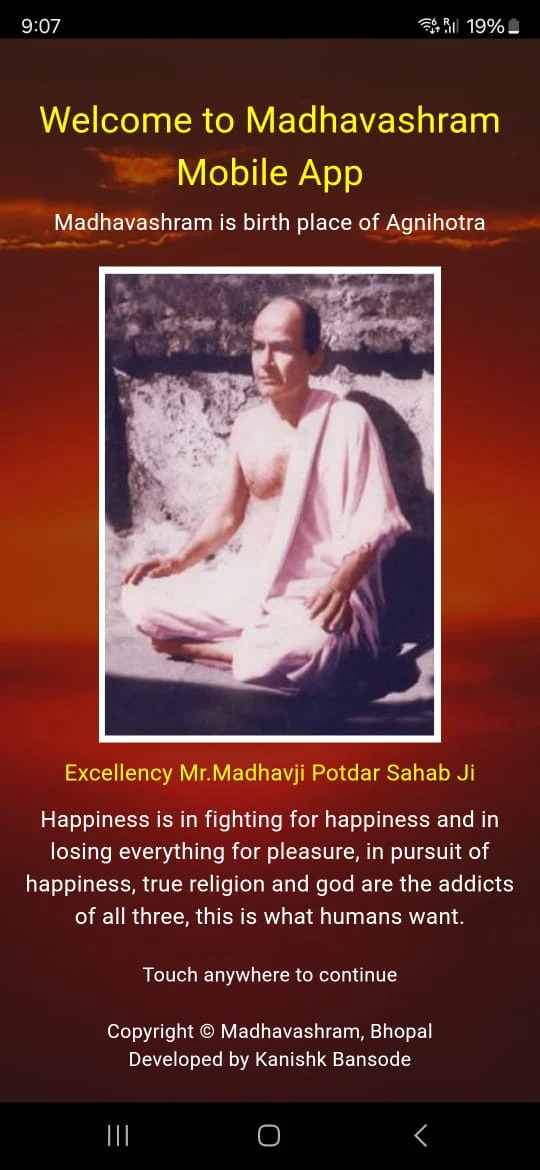
As you know, the practice of Agnihotra Yajna was revived in the present age, and the first Agnihotra of this era was performed on 22 February 1963. However, Agnihotra itself is not a new concept. Its roots go back to ancient Vedic times. It is mentioned primarily in the third chapter of the Yajurveda, particularly in the Shatapatha Brahmana (2:3:3:9), where it is stated that the two offerings made during Agnihotra create a path for spiritual upliftment and liberation.
Agnihotra is also referenced in the Ramayana. In the Ayodhya Kanda, it is described that Lord Rama, Sita, and Lakshmana performed Agnihotra daily before leaving for the forest and continued doing so during their exile. Additionally, when they visited the ashrams of sages such as Bharadwaj and Valmiki, the sacred fire of Agnihotra was always seen burning continuously. This indicates the importance of this practice in ancient spiritual life.
King Dasharatha, the ruler of Ayodhya, is also described as performing Agnihotra rituals regularly in the morning and evening. Although the Bhagavad Gita does not directly mention Agnihotra, it emphasizes the significance of fire (Agni) in spiritual practices and sacrifices.
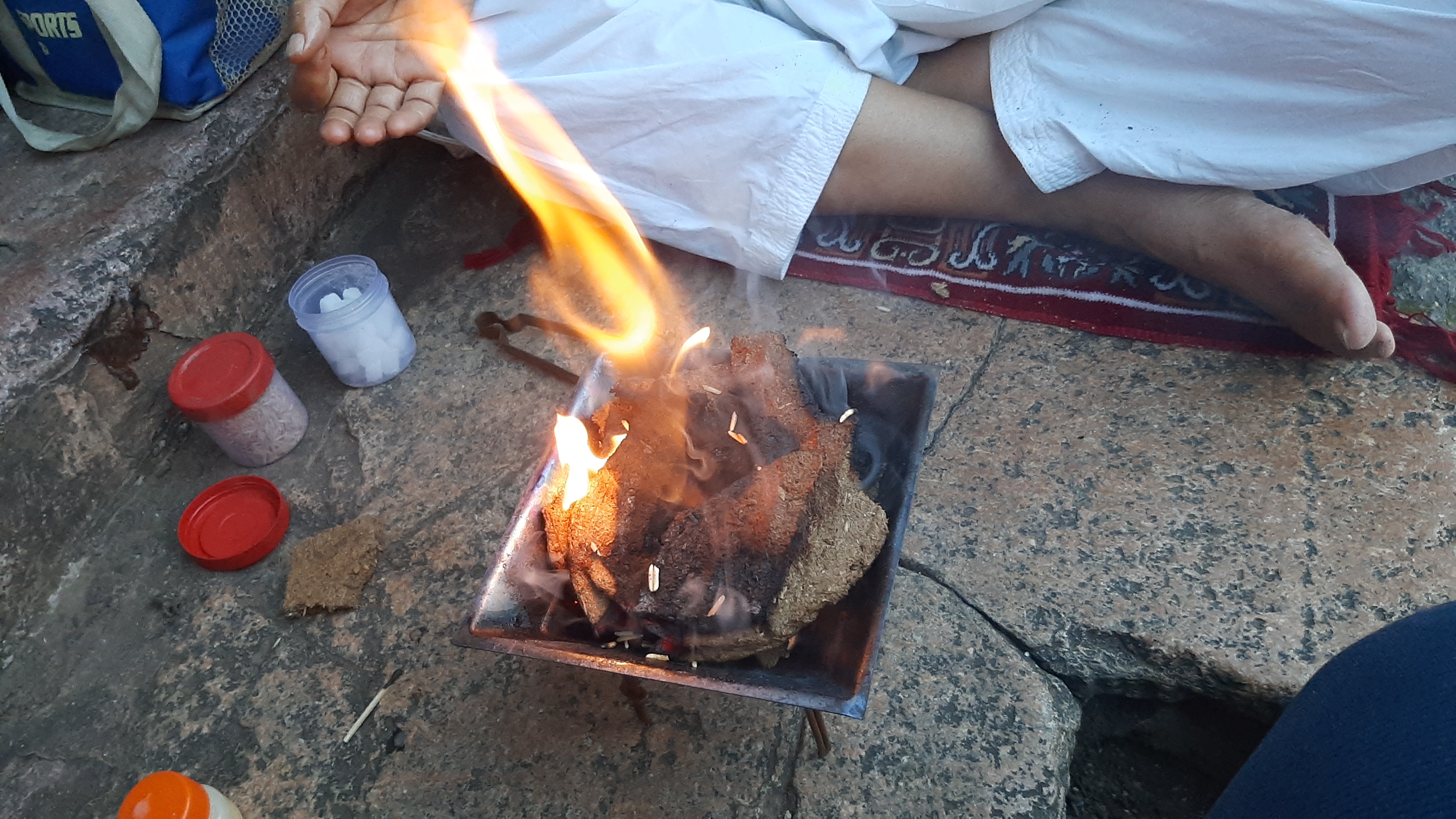
The necessity of Agnihotra can be understood through
a simple observation: human life depends entirely on the five elements of
nature (earth, water, fire, air, and space). These elements nourish us
directly and indirectly and provide the energy required for survival.
All living beings—animals, birds, trees, and
plants—also depend on these same elements. However, there is a fundamental
difference between humans and other living beings. While all creatures take
from nature, they also give something back in return. Even after death, animals
and plants continue to nourish other life forms, including microscopic
organisms.
In contrast, modern humans have largely forgotten
this natural cycle of giving back. They have become self-centered and
disconnected from nature, which leads to imbalance and suffering in life.
Agnihotra serves as a means to restore this balance.
It is described as a divine code—a simple process governed by five
rules, yet containing a deeper spiritual mechanism. When performed regularly at
sunrise and sunset, Agnihotra is believed to harmonize natural energies and
restore balance in the environment.
Why Agnihotra is Necessary


Agnihotra as a Divine Code
Agnihotra may appear to be a simple fire ritual, but
it is much more than that. It functions like a hidden code embedded in nature
by the divine. Just as machines operate through coded instructions—either
manually or automatically—nature too is governed by subtle laws and patterns.
According to this understanding, Agnihotra acts as a
medium through which humans can reconnect with these natural laws. It is
believed to influence the balance of energies such as Vata, Pitta, and Kapha,
and contribute to the restoration of environmental harmony.
The process does not require intellectual
understanding. One does not need to analyze or decode it. Instead, it is meant
to be practiced with sincerity and discipline. The act itself is considered
sufficient, as the effects unfold naturally.
Agnihotra is our Duty
Agnihotra is not merely a belief system or something
to be accepted intellectually. It is a practice and a responsibility.
Performing Agnihotra is seen as a way of contributing to the well-being of
nature.
Just as we clean our homes daily, Agnihotra is
described as a way to cleanse the environment. It requires only a few minutes
every day, yet it is considered highly significant.
The founder emphasized that eventually, every
individual may feel the need to perform Agnihotra, as it is part of a larger
effort to revive ancient wisdom and restore balance in the world.



The Five Rules of Agnihotra
Agnihotra is governed by five essential rules, which
must be followed strictly:
Time Discipline (Samay Sadhana)
Time discipline is one of the most
important aspects of Agnihotra. It involves both practice and proper time
management. In today’s busy lifestyle, it may initially be difficult to follow
precise timings, but with consistent effort, it becomes manageable.
There are tools, such as mobile
applications, that help calculate the exact sunrise and sunset timings for any
location. Beginners can start with either morning or evening practice and
gradually adopt both.
Even if the practice is interrupted for a few days, it can be restarted without any issue. Mistakes in the beginning—such as incorrect timing, improper arrangement, or pronunciation errors—are natural and should not discourage the practitioner.
Conclusion
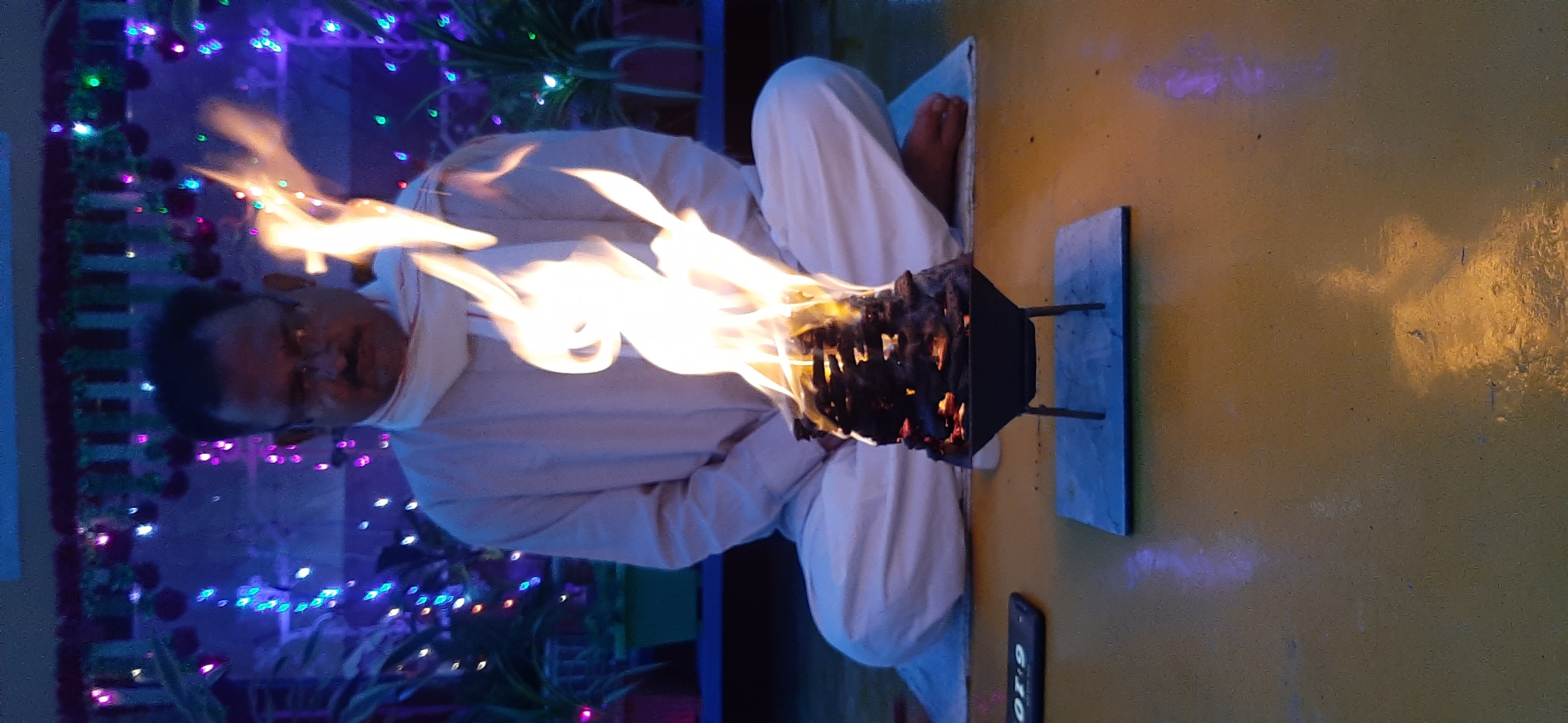
Agnihotra is a simple yet profound practice rooted in ancient wisdom. It is not merely a ritual but a disciplined action aimed at restoring balance within the individual and the environment.
Although modern science has not yet fully explained how Agnihotra works, it continues to be practiced and explored. It is believed that future advancements may help in understanding its deeper effects.
Ultimately, Agnihotra is not about belief alone—it is about practice. By dedicating just a few minutes daily with sincerity and discipline, one can gradually make it an integral part of life and contribute to the harmony of nature.
Although modern science has not yet fully explained how Agnihotra works, it continues to be practiced and explored. It is believed that future advancements may help in understanding its deeper effects.
Ultimately, Agnihotra is not about belief alone—it is about practice. By dedicating just a few minutes daily with sincerity and discipline, one can gradually make it an integral part of life and contribute to the harmony of nature.